


Our Family Has Given A Voice To The Injured For Over 50 Combined Years
Landlord Negligence Lawyer in NJ
Tenants who get hurt because a landlord let something break usually make the same mistake in the first week: they text about it. Text messages are useful evidence, but they do not carry the weight of a written notice sent through email or certified mail.
A landlord negligence lawyer in NJ builds these cases around what the landlord knew, when the landlord knew it, and what the landlord did (or did not do) after. A Newark tenant who assumes the landlord’s silence means the case is weak is often wrong.
Our team at Goldstein & Goldstein, LLP represents tenants injured by unsafe rental conditions across Newark, East Orange, Irvington, the Ironbound, and the broader Essex County market. Reach us through our contact form for a private read on what happened.
How Do Injury Claims Against Landlords Differ From Housing Court?
Injury claims against landlords are personal injury lawsuits seeking compensation for harm caused by unsafe property conditions.
They are different from landlord-tenant matters involving rent, eviction, lease disputes, or habitability defenses. The legal issues, procedures, and remedies are not the same.
Personal Injury Claims Seek Compensation for Physical Harm
 A landlord negligence claim focuses on whether an unsafe condition caused an injury and whether the landlord can be held legally responsible. Damages may include medical expenses, lost income, pain and suffering, and other losses tied to the injury.
These claims are generally handled as civil personal injury cases rather than as landlord-tenant disputes.
Landlord-Tenant Court Handles Rent and Possession Issues
New Jersey landlord-tenant proceedings typically address issues such as unpaid rent, eviction, possession of the property, and certain habitability defenses. They are not designed to resolve a tenant’s personal injury claim for damages caused by a dangerous condition.
A tenant may have both a housing-related dispute and a separate injury claim, but the two matters involve different legal questions.
Our Firm Focuses on the Injury Case
Goldstein & Goldstein, LLP handles tenant injury claims as personal injury matters. Our office does not take eviction, lease, or rent-withholding cases, allowing our attorneys to focus on proving the dangerous condition, notice, causation, and damages.
Our Treating-Doctor Network Can Help With Ongoing Care
Serious injuries from stair falls, ceiling collapses, and other rental defects may require orthopedic, neurological, or other follow-up care beyond an emergency room visit.
Our established treating-doctor network across northern New Jersey can help injured clients access appropriate providers when needed.
Goldstein & Goldstein, LLP has represented Essex County injury clients since 1997. Our four attorneys have more than 50 combined years of trial and litigation experience in New Jersey, and Michael J. Goldstein is a New Jersey Supreme Court Certified Civil Trial Attorney.
Representative firm results include $1.1 million, $825,000, $800,000, $695,000, and $609,000. Past results do not predict any specific outcome. Our client rating is 4.7 stars across 316 Google reviews, with intake available in English, Spanish, and Haitian Creole 24 hours a day.
What Counts as Negligent Property Maintenance in New Jersey?
 Negligent property maintenance in New Jersey means a landlord failed to keep a rental unit or common area in reasonably safe condition and someone got hurt as a result. The claim is a personal injury claim, not a housing court matter. Liability turns on the landlord’s duty, whether the landlord had notice of the defect, and whether the defect caused the injury.
Common examples of negligent maintenance that support an injury claim include:
- Broken or missing stair treads and handrails in interior or exterior stairwells
- Cracked, uneven, or unlit walkways and porches at the entrance to the building
- Ceilings, plaster, or fixtures that fell after visible water damage
- Broken door locks that led to a foreseeable assault
- Unrepaired electrical hazards, including exposed wiring or non-working outlets
- Deteriorated flooring or subflooring that gave way under normal use
Not every accident inside a rental is the landlord’s fault. The injury has to trace back to a condition the landlord had a legal duty to fix, and the landlord had to know about the condition (or reasonably should have known) before someone got hurt.
What Are a Landlord’s Legal Duties Under NJ Habitability Law?
New Jersey imposes an implied warranty of habitability on every residential lease, established by the Supreme Court in Marini v. Ireland, 56 N.J. 130 (1970). The warranty requires landlords to keep the premises fit for human habitation throughout the tenancy.
When a landlord breaches that duty and a tenant is injured as a foreseeable result, the tenant may have a personal injury claim.
The duty landlords owe often varies by the part of the property involved:
| Area of Property | Landlord Duty |
|---|---|
| Common areas (stairwells, hallways, entryways, shared walkways) | Landlord retains control and generally owes a duty of reasonable care to keep the area safe |
| Interior of the rental unit | Landlord must maintain systems and structural elements, and must repair known defects the tenant reported |
| Exterior building components (roof, gutters, exterior stairs, porches) | Landlord generally responsible under the lease and the warranty of habitability |
| Sidewalks abutting the property | Duty varies with property type; commercial and multi-family owners generally owe abutting-sidewalk duties |
| Fixtures the landlord installed | Landlord generally responsible for defects and needed repairs |
Newark’s Multiple Dwelling Law under N.J.S.A. 55:13A adds inspection requirements for buildings of three or more units. Inspection records and prior violations often serve as key evidence in these cases.
Why Does Written Notice Matter So Much in Landlord Injury Cases?
Written notice is often the single biggest factor separating a strong landlord negligence case from a weak one.
Landlords in New Jersey are generally liable for injuries caused by defects they had actual or constructive notice of, so proving what the landlord knew is where these cases succeed or fail.
A verbal complaint made to a superintendent in a hallway is hard to reconstruct months later, while an email with a dated photo attached creates a record no one can dispute.
Tenants who plan to make a claim benefit from creating a paper trail before the injury ever happens:
- Send maintenance requests by email or certified mail rather than by text or phone.
- Take dated photographs of the defect every time you notice it.
- Save the landlord’s replies (or the silence, if the landlord does not reply).
- Report serious hazards to the Newark Division of Inspection and Enforcement or the local code enforcement office in East Orange or Irvington.
- Keep a written log of dates, times, and details of every verbal conversation.
Landlords who receive a written maintenance request cannot later claim they were unaware of the condition. That documented notice is what turns a “he said, she said” dispute into a case built on evidence.
What Should You Do After an Injury Caused by Unsafe Rental Conditions?
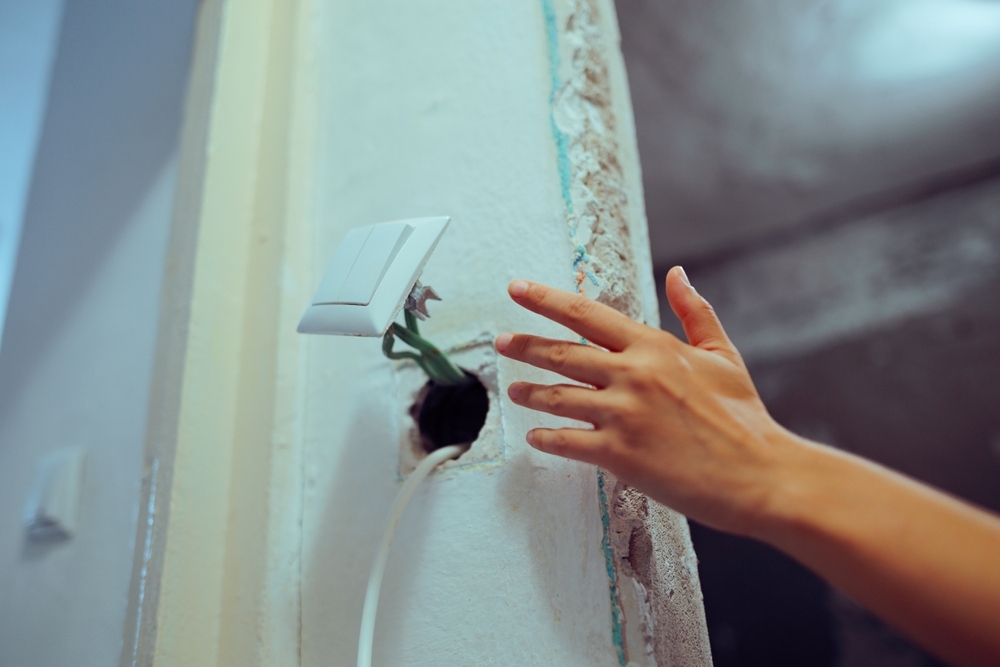 Preserving evidence in the days after the injury is the most useful thing an injured tenant does before hiring a landlord negligence lawyer.
Rental conditions change fast. Landlords often repair the defect within 24 to 48 hours of an injury, which removes the physical evidence that would have proven the claim.
Steps that protect the injury claim include:
- Photograph the defect from multiple angles before any repair happens.
- Get medical attention promptly and describe how the fall or injury occurred to every provider.
- Report the injury to the landlord or building manager in writing.
- Save torn or bloodied clothing, broken personal items, and any physical evidence.
- Identify neighbors or visitors who saw the defect or witnessed the injury.
- Request that the landlord preserve any surveillance video covering the location.
Every one of these steps addresses a defense argument the landlord’s insurer is likely to raise. Missing photographs let the landlord claim the condition was minor. No medical record from the day of the fall lets the insurer argue the injury came from something else.
What Damages May a Tenant Recover for Landlord Negligence in NJ?
A tenant injured by unsafe rental conditions may recover damages for medical expenses, lost income, pain and suffering, and future losses tied to the injury. The specific amount depends on the severity of the injury, the strength of the liability evidence, and the long-term effect of the injury.
Medical Expenses
Recoverable medical expenses may include emergency room treatment, diagnostic imaging, surgery, follow-up appointments, physical therapy, rehabilitation, medications, and other necessary care related to the injury.
Lost Income and Reduced Earning Capacity
A tenant who misses work because of the injury may pursue compensation for lost wages. More serious injuries may also support a claim for reduced future earning capacity when the injury limits the person’s ability to return to the same work or earn at the same level.
Pain and Suffering
Damages may include compensation for physical pain, emotional distress, and loss of enjoyment of life caused by the injury. The value of these damages depends heavily on the severity, duration, and documented effect of the condition.
Future Care and Out-of-Pocket Costs
Serious injuries may require future treatment, mobility equipment, home care, transportation assistance, or other ongoing expenses. These projected losses generally need to be supported by medical records and, when appropriate, expert testimony.
Damages calculations look very different for a broken wrist that heals within months than for a spinal injury that causes lasting limitations. Strong documentation helps connect each claimed loss to the landlord’s negligence and the resulting injury.
How Long Do You Have to File a Landlord Negligence Injury Claim in NJ?
Tenants generally have two years from the date of the injury to file a landlord negligence lawsuit in New Jersey under N.J.S.A. 2A:14-2. Missing that deadline typically ends the case, regardless of the strength of the underlying claim.
The two-year window applies whether the landlord is an individual, a limited liability company, or a large management company.
Two situations shorten the timeline:
- Injuries in publicly owned housing. Falls or injuries in buildings owned by the Newark Housing Authority or another public entity require a formal Tort Claims Notice within 90 days under the New Jersey Tort Claims Act.
- Wrongful death claims. When a tenant does not survive the injury, the two-year clock runs from the date of death, and the personal representative of the estate files the claim.
Early legal engagement helps because landlord insurers move quickly after serious injuries. Adjusters sometimes reach out within days with a settlement offer designed to close the file before the tenant knows the value of the claim.
FAQs for Landlord Negligence Lawyers in NJ
Can I Sue My Landlord if I Only Complained Verbally About the Problem?
Yes, though written notice makes the case significantly stronger. New Jersey law generally requires the landlord to have actual or constructive notice of the defect.
Verbal complaints count as actual notice, but they are harder to prove months later. An attorney may still build the case using witnesses, prior 311 calls, or the visible nature of the defect.
Do I Need to Move Out to Sue My Landlord for an Injury?
No. Suing a landlord for injuries caused by unsafe conditions has nothing to do with whether you continue to rent from that landlord. New Jersey law protects tenants from retaliation for filing legitimate claims. Many tenants remain in the unit throughout the personal injury case.
What if the Landlord Fixed the Problem Right After I Got Hurt?
You may still have a claim. Under New Jersey Rule of Evidence 407, subsequent remedial measures are generally not admissible to prove the landlord was negligent, but the underlying defect and prior notice remain provable through photos, witnesses, and maintenance records.
Prompt repair does not erase the injury or the liability.
How Much Does a Landlord Negligence Lawyer in NJ Cost Up Front?
Nothing. Our firm handles tenant injury claims on a contingency basis, meaning no recovery, no fee. Our office advances the case costs (expert witnesses, deposition transcripts, records requests, filing fees) and recoups them only from a settlement or verdict.
What if the Landlord Blames Me for the Fall?
You may still recover, though the defense will push back. New Jersey follows modified comparative negligence, which allows recovery as long as the tenant is 50 percent or less at fault.
A landlord who ignored months of written maintenance requests rarely wins the fault argument at trial, even against a tenant who missed a step in poor lighting.
Get a Straight Read Before You Sign Anything the Landlord’s Insurer Sends

Richard Goldstein, Landlord Negligence Attorney
Landlord insurance carriers often reach out to injured tenants within days of a serious fall, and the first offer usually anchors on numbers that reflect what the tenant does not yet know. A conversation with counsel before signing anything protects the value of the claim.
Our team at Goldstein & Goldstein, LLP has represented tenants injured by unsafe rental conditions across Essex County since 1997. Reach us through our secure contact form to request a private case review. Intake staff answer in English, Spanish, and Haitian Creole, around the clock.
Our East Orange Office
60 Evergreen Place
Suite 502
East Orange, NJ 07018
